hauyeedoin · Portfolio Field Report No. 09 Bunsik · Signage System · 2026
Design Systems · Signage Design · Operational Design

Building a scalable
signage system

As Bunsik expanded, each new opening required a different combination of operational signs, customer notices and branding materials. Rather than treating every opening as a separate design task, I gradually developed a system that allowed signage to be prepared, selected and deployed consistently across different locations.

Client Bunsik Project Signage system Role Creative Designer Scope Design systems · signage design · operational design Period March – July 2026
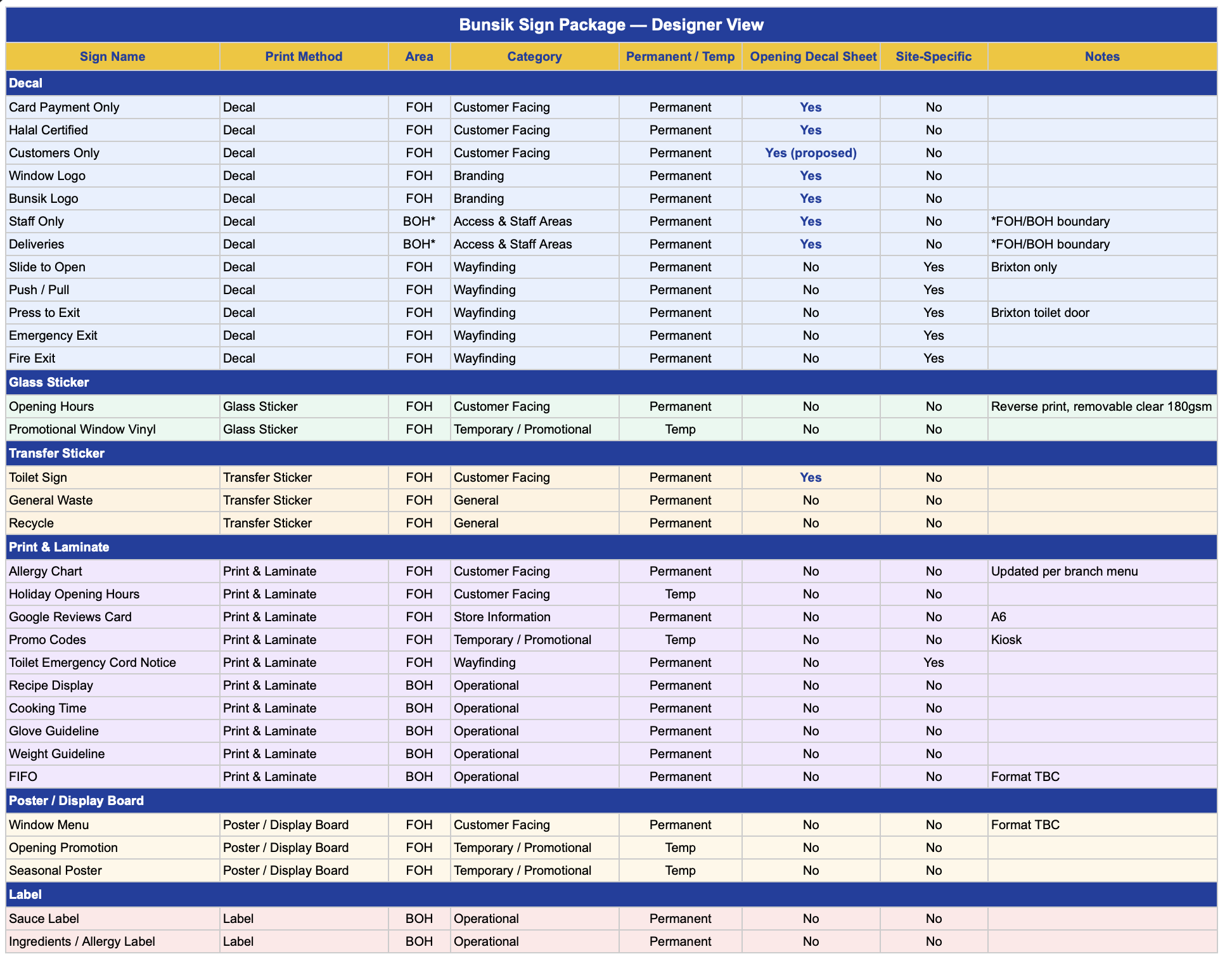
Signage package – asset checklist
Central signage package organised by production method, location, purpose and permanence
A central signage package organised every asset by production method, location, purpose and permanence, allowing each new store to assemble the signage it required without rebuilding the process from scratch.
The brief

As more stores opened, the amount of signage continued to grow. Some signs appeared in every location, while others depended on the layout, equipment or operational needs of an individual store.

The design work itself wasn't particularly difficult. The challenge was repeatedly searching through folders, checking previous projects and confirming with the operations team which files were actually needed for each opening.


Where it started

The system didn't begin with the checklist. It started with a template. Every new sign was being created from different files, dimensions and layouts, making even routine updates more time-consuming than they needed to be.

Many temporary signs were also being printed on card and attached with glue dots. They wore out quickly, looked inconsistent and weren't practical for restaurants operating every day. Creating reusable templates simply became the easiest way to remove that repeated work.

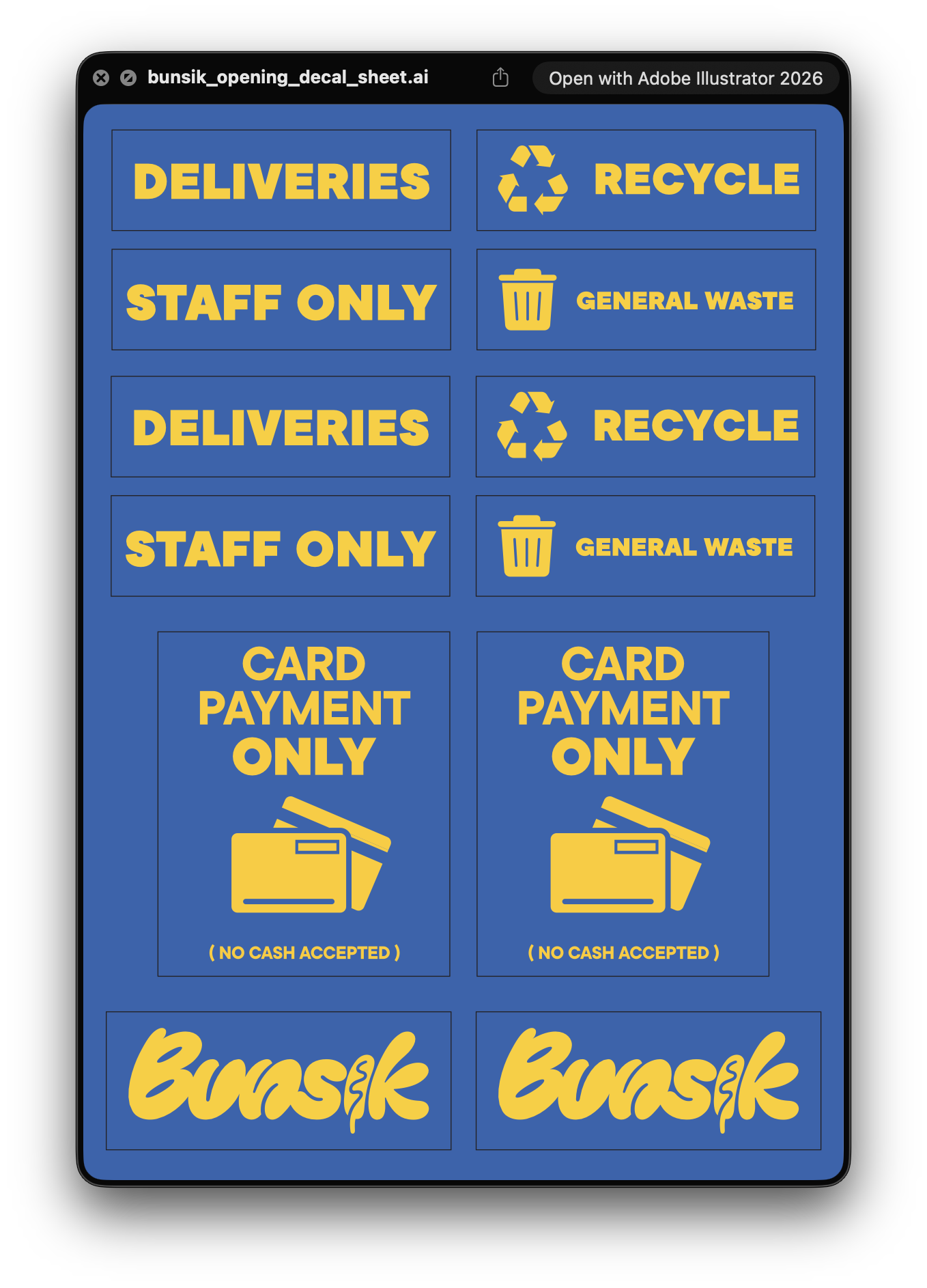
Decal sheet – grouped for print
Print-ready decal sheet grouping frequently used signs for easy deployment
Rather than preparing individual files, frequently used decals were grouped into a single print-ready sheet so each sign could simply be peeled off and applied during a store opening.

"When I notice the same decisions being made repeatedly, I start looking for ways to turn them into a reusable system."

From templates to a system

As more reusable assets were created, a larger pattern became obvious. The company already had an opening checklist for launching new stores, but there was no equivalent system for signage.

Instead of asking what had been used in the previous branch, I organised every sign into a structured package based on production method, location, purpose and whether it was permanent, temporary or site-specific.

That meant each opening could select only the signage it required while still working from the same set of prepared assets. The system remained flexible for different store layouts without sacrificing consistency.


Reflection

As organisations grow, repeated design tasks often become operational problems rather than creative ones. The goal isn't to remove flexibility. It's to create a foundation where different requirements can be supported without rebuilding the process every time.

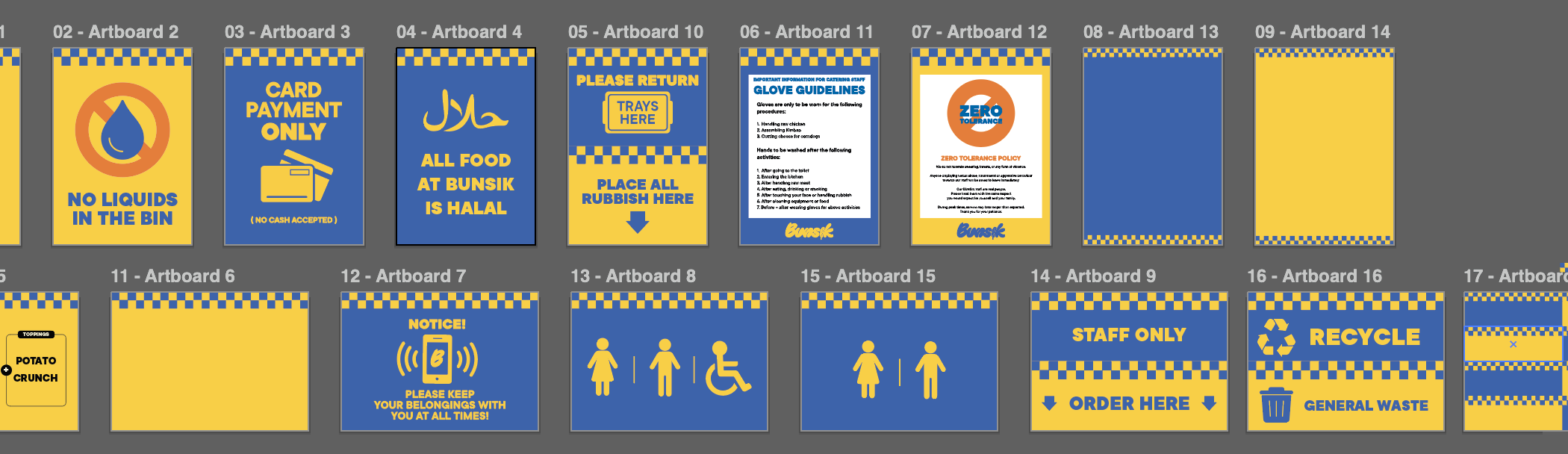
Signage templates – standardised system
Standardised signage templates establishing consistent visual language across operational signs
Standardised templates established a consistent visual language across operational signage, allowing new assets to be produced without redefining the design each time.
Template
first
Starting point
Reusable files replaced one-off production each time
Decal
sheets
Production method
Grouped print sheets replaced individual card-and-glue signs
Package
system
Outcome
Assets organised by method, location, purpose and permanence
Multi-
site
Deployment
Same system deployed across different store layouts
← Back to portfolio ← Back to reports Next: Moida vinyl →
hauyeedoin.com · 2026